
Imagine sitting under a vast blanket of darkness, gazing up at the twinkling lights scattered across the night sky.
With each flicker, a sense of awe and curiosity washes over you, igniting a desire to explore the wonders of the stars.
In this article, you will embark on a journey to unravel the mysteries of the cosmos, discovering the beauty and brilliance hidden within the depths of our galaxy.
So, grab your telescope and get ready to immerse yourself in the captivating world of stargazing.
The Importance of Stargazing

Encouraging Curiosity and Wonder
Stargazing has the remarkable ability to spark curiosity and wonder in people of all ages.
When you look up at the night sky and see the stars twinkling above, you can’t help but be filled with a sense of awe and wonder about the vastness of the universe.
This curiosity often leads to a desire to learn more about the stars, planets, and other celestial objects that make up our universe.
Stargazing encourages us to ask questions, seek answers, and explore the mysteries of the cosmos.
Understanding the Universe
By observing the stars, we gain a deeper understanding of the universe and our place within it.
Stargazing allows us to study the patterns and movements of celestial objects, leading to insights into the laws of physics and the nature of space and time.
By observing and studying the stars, scientists have made groundbreaking discoveries about the birth, life, and death of stars, as well as the formation of galaxies and the evolution of the universe itself.
Stargazing offers us the opportunity to unravel the mysteries of the cosmos and expand human knowledge.
Cultural Significance
Throughout history, stargazing has held great cultural significance in various civilizations.
The stars have been used for navigation, timekeeping, and calendar systems.
They have also served as a source of inspiration for art, literature, and mythology.
Many ancient cultures believed that the stars held mystical powers and could influence human destiny.
Even today, stargazing holds a special place in culture, whether it’s through the use of zodiac signs or the naming of constellations.
By engaging in stargazing, we connect with our ancestors and tap into the rich cultural heritage that surrounds our exploration of the night sky.
Preparing for Stargazing
Choosing the Right Location
The first step in preparing for a night of stargazing is to choose the right location.
Ideally, you want to find a place that is away from the bright lights of cities and other sources of light pollution.
The darker the sky, the better you will be able to see the stars.
Look for a location that has a clear view of the horizon and minimal obstructions, such as trees or buildings, that could block your view.
If possible, try to find a spot that has a high elevation, as this can further enhance your visibility of the night sky.
Checking Weather Conditions
Before heading out for a night of stargazing, it’s important to check the weather conditions.
Clear skies are essential for optimal stargazing, so be sure to look for forecasts that predict minimal cloud cover.
Additionally, you’ll want to check the moon phase, as the brightness of the moon can affect the visibility of stars and other celestial objects.
New moon nights, when the moon is not visible, are ideal for stargazing.
Plan your stargazing outings accordingly to maximize your chances of clear skies and optimal viewing conditions.
Required Equipment
While stargazing can be enjoyed without any equipment, there are a few tools that can enhance your experience.
A pair of binoculars is a great starting point for beginners, as it allows you to magnify the view and observe celestial objects in more detail.
If you want to take your stargazing to the next level, consider investing in a telescope.
Telescopes allow you to see distant stars, planets, and even galaxies with greater clarity.
When choosing a telescope, consider factors such as aperture size, magnification power, and portability.
Additionally, a star chart or mobile app can be invaluable for identifying stars, constellations, and other celestial objects.
Identifying Stars and Constellations

Understanding the Celestial Sphere
To identify stars and constellations, it’s important to have a basic understanding of the celestial sphere.
The celestial sphere is an imaginary sphere that appears to encircle the Earth, with the Earth at its center.
Stars and other celestial objects appear to be projected onto this sphere, allowing us to measure their positions and movements.
The celestial sphere is divided into imaginary lines, such as the celestial equator and the ecliptic, which help us locate specific points in the sky.
By understanding the celestial sphere and its coordinates, you can navigate the night sky with greater ease.
Recognizing Popular Constellations
One of the joys of stargazing is being able to recognize and identify constellations.
Constellations are groups of stars that form recognizable patterns or shapes in the sky.
Throughout history, different cultures have identified and named constellations based on their cultural or mythological significance.
Some popular constellations visible from different parts of the world include Orion, Ursa Major (the Big Dipper), and Cassiopeia.
Learning to recognize these constellations can be a fun and rewarding experience, as it allows you to navigate the night sky and locate other celestial objects.
Using Star Maps and Mobile Apps
If you’re new to stargazing or need help identifying stars and constellations, star maps and mobile apps can be valuable resources.
Star maps are charts that depict the positions of stars, constellations, and other celestial objects at a given date and time.
They can be used to find specific celestial objects or to navigate the night sky in general.
Mobile apps, on the other hand, provide interactive star maps and additional features such as augmented reality, allowing you to point your device at the sky and identify stars and constellations in real-time.
These tools can greatly enhance your stargazing experience and help you learn more about the wonders of the night sky.
Exploring Different Types of Stars
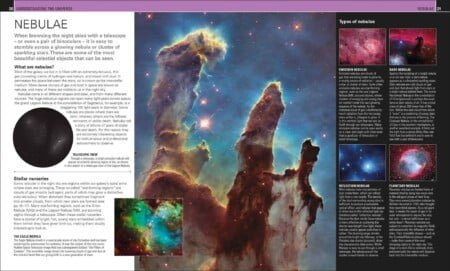
The Sun: Our Nearest Star
The Sun, our nearest star, is a fascinating object to study.
As the source of light and heat for our planet, the Sun plays a crucial role in sustaining life on Earth.
Through stargazing, we can learn more about the Sun, its structure, and its behavior.
It’s important to note that observing the Sun requires proper eye protection, as direct exposure to its intense light can damage your eyes.
Special solar filters or telescopes with solar filters must be used to safely observe the Sun.
White Dwarfs and Neutron Stars
White dwarfs and neutron stars are the remnants of stars that have reached the end of their life cycles.
When a star similar in size to our Sun runs out of fuel, it undergoes a process called stellar death, collapsing under its own gravity.
If the star has a mass between 1.4 and 2.1 times that of the Sun, it becomes a white dwarf, a dense and compact object about the size of Earth.
Neutron stars, on the other hand, are even denser than white dwarfs and form after a supernova explosion.
They are incredibly fascinating objects to study and offer insights into the nature of matter under extreme conditions.
Red Giants and Supergiants
Red giants and supergiants are stars in the later stages of their evolution.
When a star similar in size to our Sun exhausts its hydrogen fuel, it begins to expand and cool, becoming a red giant.
Red giants can be many times larger than their original size and shine brightly with a reddish hue.
Some stars, known as supergiants, go through an even more dramatic expansion phase, becoming some of the largest stars in the universe.
These massive stars often end their lives in magnificent supernova explosions and may leave behind remnants such as white dwarfs, neutron stars, or black holes.
The Life Cycle of a Star
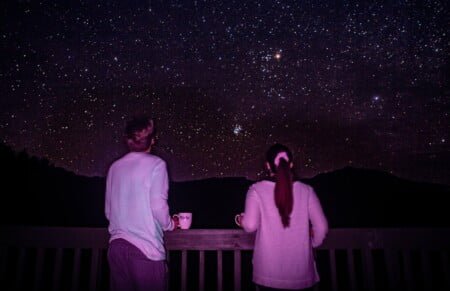
Birth: Protostars and Stellar Nurseries
Stars are born in vast regions of gas and dust called stellar nurseries.
These nurseries are rich in molecular hydrogen, the fuel that powers the formation of stars.
When a dense region within a stellar nursery begins to collapse under its own gravity, it forms a protostar—a precursor to a star.
Over time, the protostar continues to gather mass, heating up and eventually reaching a temperature and density sufficient to initiate nuclear fusion in its core.
This marks the beginning of the star’s journey into the main sequence phase of its life cycle.
Main Sequence: The Star’s Adult Life
The main sequence is the longest phase in the life cycle of a star.
It is during this phase that a star is considered to be in its adult life, steadily fusing hydrogen into helium in its core, releasing large amounts of energy in the process.
The energy generated by this fusion reaction supports the star, preventing it from collapsing under its gravity.
The length of time a star spends on the main sequence is determined by its mass.
Higher-mass stars have shorter main sequence lifetimes, while lower-mass stars can remain on the main sequence for many billions of years.
Death: Supernovae, Neutron Stars, and Black Holes
After spending billions of years on the main sequence, stars eventually exhaust their nuclear fuel and reach the final stages of their lives.
The fate of a star depends on its mass.
Smaller stars, like our Sun, will shed their outer layers and form a planetary nebula, leaving behind a white dwarf.
More massive stars, however, undergo a more explosive death.
The core of the star collapses under its own gravity, resulting in a supernova—a cataclysmic explosion that releases an enormous amount of energy.
The remnants of a supernova can form neutron stars or black holes—objects with intense gravitational forces that can warp spacetime.
Phenomena in the Night Sky
Meteor Showers
Meteor showers are spectacular events that occur when Earth passes through the debris left behind by comets or asteroids.
These debris, called meteoroids, enter Earth’s atmosphere and burn up, causing streaks of light in the sky known as meteors or shooting stars.
Meteor showers are named after the constellation from which the meteors appear to originate, called the radiant.
Some well-known meteor showers include the Perseids, Geminids, and Leonids.
To observe a meteor shower, find a dark location away from city lights and look up at the night sky.
Patience is key, as meteor showers can have peaks and lulls in activity.
Aurora Borealis and Aurora Australis
The aurora borealis, also known as the Northern Lights, and the aurora australis, also known as the Southern Lights, are breathtaking displays of colored lights in the polar regions.
These natural phenomena occur when charged particles from the Sun collide with atoms and molecules in Earth’s atmosphere, creating glowing curtains of light.
The colors of the auroras vary depending on the type of gas particles involved and their altitude.
Green is the most common color, but pink, red, yellow, blue, and purple can also be observed.
The best times to see the auroras are during the winter months in the polar regions.
Planetary Alignments and Conjunctions
Planetary alignments and conjunctions are celestial events that occur when two or more planets appear close together in the night sky.
While planets are constantly moving in their orbits, from our perspective on Earth, they sometimes align, creating visually striking configurations.
Conjunctions occur when planets appear very close to each other, often passing by or overlapping in the sky.
These events can be observed without any specialized equipment, and they offer a unique opportunity to witness the dynamics of our solar system firsthand.
Keep an eye on astronomical calendars and media outlets to stay updated on upcoming planetary alignments and conjunctions.
Observing Planets and Other Celestial Objects
Identifying Planets
Identifying planets in the night sky is a rewarding and exciting aspect of stargazing.
Unlike stars, planets do not twinkle but instead appear as steady points of light.
The five planets visible to the naked eye, known as the visible planets or the wanderers, are Mercury, Venus, Mars, Jupiter, and Saturn.
These planets can often be identified by their steady brightness and their movement against the background of stars.
By observing them over time, you can track their paths across the sky and witness their changing positions relative to the stars.
Viewing the Moon and its Phases
The Moon is the Earth’s natural satellite and a captivating object to observe.
Its phases, which change as the Moon orbits the Earth, offer a visual journey through its cycle.
From the New Moon to the Full Moon and back again, each phase reveals different portions of the Moon’s surface illuminated by the Sun.
Observing the Moon through binoculars or a telescope allows you to explore its craters, mountains, and other interesting features in greater detail.
Consider keeping a lunar calendar handy to track the Moon’s phases and plan your moonlit stargazing adventures.
Observing Satellites and the International Space Station
In addition to stars, constellations, and planets, the night sky is also filled with man-made objects—satellites.
These human-made spacecraft, which orbit the Earth, can be observed as they pass overhead.
The International Space Station (ISS), in particular, is a prominent satellite that can be identified with the naked eye.
Due to its size and reflective surfaces, the ISS appears as a bright, moving object in the sky.
There are numerous websites and mobile apps that provide information on when and where to look for the ISS and other satellites, allowing you to catch a glimpse of human space exploration from your own backyard.
Stargazing Tips for Beginners
Patience and Adaptability
As a beginner stargazer, it’s important to be patient and adaptable.
The night sky can be vast and overwhelming, so take your time to familiarize yourself with the stars and constellations.
Don’t be discouraged if you can’t identify everything immediately—it takes time and practice.
Additionally, weather conditions can change quickly, so be prepared to adjust your stargazing plans accordingly.
If clouds roll in, try to find breaks in the sky or wait for a clearer night.
Flexibility and a willingness to adapt will greatly enhance your stargazing experiences.
Allowing Eyes to Adjust to the Dark
When stargazing, it’s crucial to allow your eyes to adjust to the dark.
Your eyes are incredibly sensitive to light and need time to adapt to the darkness in order to see the faintest stars.
Avoid looking at bright lights, such as your phone or a flashlight, as they can disrupt your night vision.
Instead, use a red flashlight or cover a regular flashlight with red cellophane to preserve your night vision.
It may take up to 30 minutes for your eyes to fully adjust, so give yourself plenty of time to acclimate before diving into your stargazing session.
Staying Comfortable and Safe
Stargazing can be a peaceful and enjoyable experience, but it’s important to stay comfortable and safe.
Dress appropriately for the weather, as temperatures can drop significantly at night.
Consider bringing blankets, chairs, or reclining loungers to make yourself comfortable during long stargazing sessions.
If you’re stargazing in a remote or unfamiliar location, it’s wise to bring a friend or let someone know where you’ll be.
A portable phone charger, water, and snacks are also recommended.
Lastly, be mindful of your surroundings and any potential hazards, such as uneven terrain or wildlife.
Stargazing as a Hobby
Joining Astronomy Clubs or Societies
If you find yourself captivated by the wonders of the night sky, consider joining astronomy clubs or societies.
These organizations provide opportunities to connect with fellow stargazers, share knowledge and experiences, and participate in group stargazing outings.
Astronomy clubs often organize workshops, lectures, and star parties, where members come together to observe celestial objects.
Being a part of an astronomy community can greatly enhance your stargazing journey, offering support, guidance, and a sense of belonging.
Astronomy Photography
Combining stargazing with photography can open up a whole new world of creative possibilities.
Astronomy photography allows you to capture stunning images of the night sky, including stars, constellations, and even deep-sky objects like galaxies and nebulae.
To get started, you’ll need a camera capable of long exposures and a sturdy tripod to prevent camera shake.
Experimenting with different settings and techniques, such as stacking multiple images or using specialized filters, can help you achieve striking astrophotography results.
Share your images with other enthusiasts and seek feedback to further refine your skills.
Citizen Science Projects
Engaging in citizen science projects is another way to deepen your involvement in stargazing.
Citizen science projects allow individuals to contribute to scientific research by collecting, analyzing, and reporting data.
Numerous projects focus on astronomy and rely on the collective efforts of volunteers to study and monitor celestial phenomena.
Through citizen science, you can actively contribute to scientific discovery and help advance our understanding of the universe.
Visit online platforms that host citizen science projects to find opportunities to participate and make a meaningful impact as a stargazer.
Preserving the Dark Skies
Light Pollution Awareness
Light pollution, caused by the excessive and misdirected use of artificial lighting, has become a significant concern for stargazers and astronomers alike.
It hinders our ability to observe the stars and impacts nocturnal ecosystems.
Raising awareness about light pollution is crucial in preserving the dark skies and the wonders they hold.
Educate yourself and others about the importance of reducing light pollution, and advocate for responsible lighting practices in your community.
By spreading awareness, we can work towards creating a world where everyone can experience the beauty of the night sky.
Encouraging Responsible Lighting Practices
To help combat light pollution, it is important to encourage responsible lighting practices.
Simple steps can make a big difference, such as installing motion sensors or timers to control outdoor lighting, using shielded fixtures that direct light downward, and using low-intensity lighting where needed.
By making these changes, we can minimize light pollution and create a more sustainable and night sky-friendly environment.
It’s essential to remember that we can enjoy the benefits of outdoor lighting while still being mindful of its impact on the night sky and ecosystems.
Engaging in Light Pollution Reduction Efforts
Beyond personal actions, there are several ways to get involved in light pollution reduction efforts.
Support organizations dedicated to preserving dark skies and advocating for responsible lighting practices.
Participate in initiatives that promote lighting solutions that minimize light pollution, such as the International Dark-Sky Association’s Dark Sky Places program.
Get involved in community efforts to raise awareness and implement lighting policies and regulations that prioritize dark sky preservation.
By actively engaging in light pollution reduction efforts, you can contribute to a brighter future for stargazers and the preservation of the wonders of the stars.
In conclusion, stargazing is a fascinating and rewarding activity that encourages curiosity, understanding, and a sense of wonder.
Whether you’re a beginner or an experienced stargazer, there is always more to explore and discover in the night sky.
By preparing properly, identifying stars and constellations, exploring different types of stars, understanding the life cycle of a star, and observing other celestial phenomena, you can deepen your connection with the universe.
Stargazing as a hobby offers opportunities to join astronomy clubs, engage in astronomy photography, and contribute to citizen science projects.
Lastly, it is crucial to preserve the dark skies by raising awareness about light pollution, encouraging responsible lighting practices, and actively participating in light pollution reduction efforts.
So grab your binoculars or telescope, find a dark spot, and embark on a journey of exploration and wonder under the starry night sky.